
Shower Remodeling in La Habra, CA
Bathroom Remodeling Pros La Habra rebuilds showers for homes in La Habra, Brea, Hacienda Heights, Rowland Heights and South Whittier. That covers new and replacement showers, walk-in and curbless showers, tub-to-shower conversions and bathtub replacement, along with the tile, waterproofing and glass that go with them. We're licensed and insured. Estimates are free, and the bathroom is cleaned up once the work is finished.

Contact Us
Shower and Tub Work We Handle
Most shower jobs start with one of these:
- Shower remodels: an old stall or tiled shower taken out to the studs and rebuilt, or refreshed with new walls, base, valve and glass
- Tub-to-shower conversions: a little-used tub removed and the alcove turned into a walk-in shower
- Walk-in and curbless showers: a low or level entry, with room for a seat and grab bars
- Bathtub replacement: a worn or chipped tub swapped for a new one in the same space
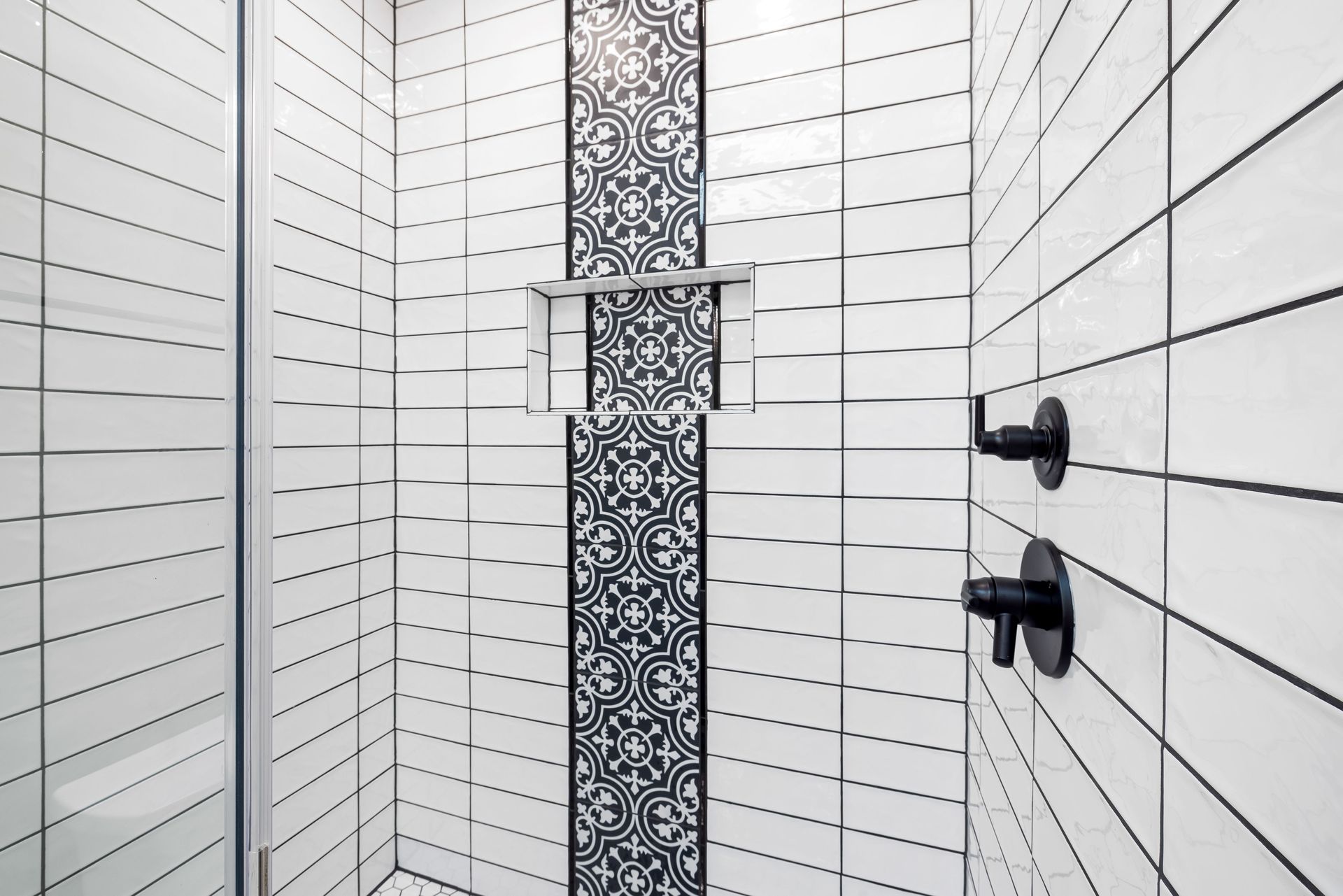
- Shower tile and waterproofing: wall and floor tile over a waterproof membrane, with the pan built to drain
- Glass doors and panels: framed or frameless enclosures, or a fixed panel on a walk-in
Tub-to-Shower Conversions
Most standard alcove tubs are 60 inches long and 30 to 32 inches wide, and California's plumbing code accepts a shower receptor of at least 30 by 60 inches as an exception to its minimum shower size. So if the tub in your hall bathroom rarely gets used as a bath, the space it sits in can often become a walk-in shower without moving walls.
A conversion usually means taking out the tub and the tile or drywall around it to reach the plumbing wall. The drain often has to move from the end where the tub emptied to the middle of the new shower floor, and it changes size too: the 2025 California Plumbing Code calls for a waste outlet of at least 2 inches on a shower, against 1½ inches for a bathtub. Where the new shower keeps a curb, the code allows between 2 and 9 inches from the curb's top edge down to the top of the drain.
Walk-In and Curbless Showers
A walk-in shower needs enough floor inside it. Under the California Plumbing Code, a shower must have at least 1,024 square inches of interior floor area (a 30-by-60-inch receptor is an exception) and be able to fit a 30-inch circle, and its floor has to fall toward the drain at between 1/8 and 1/2 inch per foot. For a curbless shower, the sloped floor needs depth. Shower system maker Schluter prefers recessing the subfloor inside the shower area where the structure allows it; raising the surrounding bathroom floor is another route, and where recessing isn't possible it pairs a prefabricated tray with a ramp. That decision is made at the start, while the floor is open.
A low entry suits anyone who finds stepping over a tub wall hard. With the walls open, wood blocking can go in behind the tile where grab bars will be fixed later. For the glass, the California Residential Code treats glazing in a tub or shower enclosure as a hazardous location when its bottom edge is less than 60 inches above the floor, so glass in those doors and panels has to be safety glazing, such as tempered glass.
Tile, Acrylic Panels and the Waterproofing Behind Them
Tile gives the widest choice of looks: porcelain and ceramic in any size, or natural stone. Acrylic wall panels go up faster and often have no grout lines to clean. Either way, the part you don't see does most of the work. USG says water doesn't affect its Durock cement board itself, but the tile industry's TCNA Handbook guidelines recommend a waterproof membrane in wet areas, applied before the tile. On a site-built shower, the pan under the floor tile is what leads water to the drain. Before it's covered, the 2025 California Plumbing Code (Section 408.8.5) calls for that pan to be water tested, with the drain plugged and the pan filled at least 2 inches deep for at least 15 minutes.
If water has already got past an old pan, our shower pan replacement and repair page explains what that job involves.
The 2025 California Plumbing Code (Sections 408.4 and 408.4.2) requires each shower and tub-shower to have its own control valve of the pressure-balance, thermostatic or combination type, and limits the water from a showerhead to 120°F. A remodel is the time to replace an older valve that lets the temperature swing when someone flushes a toilet.
Bathtub Replacement
Some homeowners want to keep a tub, for children or for a soak. A replacement tub usually goes into the same alcove. Taking the old one out generally means removing a strip of tile or drywall just above it (Home Depot's guide says about 6 inches), or a fiberglass surround, so the new tub can be set level. It's also the moment to change the valve and showerhead. California's CALGreen standard limits new residential showerheads to 1.8 gallons per minute at 80 psi. Where a home dates from January 1, 1994 or earlier and the job needs a permit, state law (SB 407) also requires noncompliant fixtures to be replaced, and that covers any showerhead rated above 2.5 gallons per minute.
Hard Water and Shower Glass
The water here is hard. In La Habra's 2025 water quality report, the city's own wells averaged 16 grains per gallon of total hardness, groundwater from Cal Domestic 13, and water imported from the Metropolitan Water District 14. Homes served by Suburban Water Systems' Whittier system, which covers parts of La Habra, averaged 14.1 grains per gallon. That mineral content dries onto glass doors and showerheads as white scale. In a new shower, a single fixed glass panel has fewer edges and tracks to clean than a sliding door, and large-format tile leaves fewer grout joints to scrub.
Planning a Remodel Because of a Leak?
If grout keeps cracking, tiles have worked loose or the shower smells musty, have it looked at before the new shower is planned. Those can be signs of a leaking shower pan, and water that gets under the tile can reach the subfloor and framing before it shows in the room.
If the framing or subfloor has been damaged, it needs repairing before a new shower goes in. Call (562) 662-3566 for a free estimate.
Typical Shower and Tub Prices Around La Habra
The ranges below come from published cost guides, some for the Los Angeles area and some national, checked in November 2026. They show what shower work tends to cost in the area, not what we charge. Treat the free estimate as the figure that counts for your bathroom. The bathroom remodel cost guide covers full remodels and the other bathroom work.
Installed, 2026
- Shower remodel or replacement $800–$15,000
- Tub-to-shower conversion $1,200–$12,000
- Walk-in shower $3,500–$15,000
- Bathtub replacement $800–$9,500
- Shower tiling $400–$6,000
Size and finishes account for most of the spread, and moving a drain or valve adds to it. Your free estimate prices your own shower.
Ranges from published cost guides, checked November 2026. Not a quote.
Shower Remodels Across La Habra and Nearby Towns
La Habra's housing is mostly older: the city's Housing Element says about 90 percent of it is more than 30 years old, so plenty of showers in town are likely to be original or to have been patched. Permits depend on where you live. Brea issues its own and requires one for upgrading or relocating plumbing fixtures. Hacienda Heights, Rowland Heights and South Whittier aren't incorporated cities; they're unincorporated Los Angeles County, so a permit there is applied for on EPIC-LA, the online portal of LA County Public Works. For the rest of what we do, see our bathroom remodeling contractor in La Habra homepage.
Shower Remodeling FAQs
Can my tub be turned into a walk-in shower?
Usually, yes. California's plumbing code accepts a 30-by-60-inch shower receptor, which fits the alcove of a standard 60-inch tub. The free estimate confirms it for your bathroom.
How much does a shower remodel cost around La Habra?
Typical published prices put a shower remodel or replacement at $800 to $15,000 in 2026, and a tub-to-shower conversion at $1,200 to $12,000. Your free estimate gives the real figure.
Does a shower remodel need a permit?
It depends on the work and on who issues permits where you live: the City of La Habra, the City of Brea, or LA County Public Works for Rowland Heights, Hacienda Heights and South Whittier. Brea, for example, requires a permit for upgrading or relocating plumbing fixtures.
Will I have to change my showerhead?
New showerheads in California are limited to 1.8 gallons per minute at 80 psi. In a home dating from January 1, 1994 or earlier, a permitted remodel also means swapping out any showerhead rated over 2.5 gallons per minute (SB 407).
Tile or acrylic panels: which is better?
Tile offers more choice of looks and can be cut to fit any size of shower. Acrylic panels go up faster and often have no grout lines to clean. Either way, the shower behind them has to be waterproof.
Do you put in grab bars?
Yes. They're easiest to anchor when wood blocking goes in behind the tile during the remodel.
Are you licensed and insured?
Yes. The Contractors State License Board lets anyone check a California license online at cslb.ca.gov, or by phone on (800) 321-2752.
Still have a question?
Phone (562) 662-3566, or send the quote form for a free estimate.